- All
- Product Name
- Product Keyword
- Product Model
- Product Summary
- Product Description
- Multi Field Search

Views: 30 Author: Site Editor Publish Time: 2026-03-11 Origin: Site
In the specialized world of cable manufacturing, technical terminology often overlaps, leading to confusion for procurement officers and even seasoned production engineers. Two terms frequently used interchangeably are "bunching" and "stranding." However, for a manufacturer looking to invest in a Double Twist Bunching Machine, understanding the nuanced differences between these two processes is vital. The choice between bunching and stranding directly impacts production speed, material costs, cable flexibility, and compliance with international standards like UL, IEC, and VDE.
This comprehensive guide explores the structural, mechanical, and economic differences between these methods, helping you determine why a double twist bunching machine is often the most profitable investment for modern wire factories.
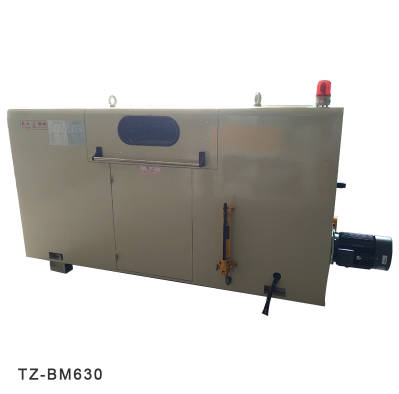
At its simplest level, both bunching and stranding involve twisting multiple individual wires (usually copper or aluminum) into a single conductor. The goal is to create a conductor that is more flexible and durable than a single solid wire of the same total cross-sectional area.
However, the "geometry" of how those wires sit next to each other is where the two processes diverge. The fundamental difference between bunching and stranding is that bunching involves a random collection of wires twisted together in a single direction without fixed positions, whereas stranding involves a precise, concentric arrangement of wires in predefined layers.
For a buyer of cable machinery, this distinction dictates whether you need a high-speed, compact Double Twist Bunching Machine or a massive, multi-bay rigid stranding line.
Bunching is a wire production process where multiple individual strands are twisted together in a random, non-geometric configuration, typically using a high-speed double twist bunching machine to achieve maximum flexibility and output. In a bunching operation, all wires are fed into a single gathering die and twisted simultaneously. Because the wires are not "positioned," they may shift slightly during the process. This "randomness" is actually a benefit for certain applications.
The "Double Twist" refers to the machine’s ability to apply two twists to the wire for every single revolution of the internal bow.
First Twist: Occurs at the entry point of the rotating bow.
Second Twist: Occurs at the exit point of the bow before the wire is wound onto the take-up bobbin.
Because a double twist bunching machine applies two twists per revolution, it can operate at effective speeds of up to 4,000 to 6,000 twists per minute (TPM), making it significantly more productive than traditional single-twist or planetary stranding equipment.
Extreme Flexibility: Because the strands can move slightly against each other, bunched wires are the preferred choice for power cords, automotive harnesses, and appliance wiring.
High Production Volume: Double twist machines are the "workhorses" of the industry, designed for 24/7 high-output environments.
Uniform Lay Direction: All strands move in the same direction (usually "S" or "Z" lay).
Stranding is a more formal arrangement. Imagine a center wire surrounded by six wires, which are then surrounded by twelve more. This is "concentric stranding."
Stranding involves arranging wire strands in specific, concentric layers (such as 1+6 or 1+6+12) to create a structurally rigid and geometrically uniform conductor, usually requiring planetary, tubular, or rigid stranding machinery.
Stranding machines are typically much longer than bunching machines. They consist of multiple "carriages" or "bays" that hold bobbins of wire. As the cable moves through the line, each bay adds a new layer of wire.
Planetary Stranding: The bobbins rotate around the axis, but they also "back-twist" to prevent mechanical stress.
Rigid Stranding: The bobbins are fixed, and the entire cage rotates. This is used for very heavy, large-diameter conductors.
Structural Integrity: The conductor maintains a perfect circular cross-section, which is essential for high-voltage insulation and overhead transmission.
Specific Layering: You can alternate the direction of each layer (e.g., left-hand lay for the first layer, right-hand for the second) to prevent the cable from untwisting under tension.
Larger Diameters: Stranding is typically used for conductors that are too large or too stiff to be processed by a bunching machine.
To help you decide which process suits your production goals, we have outlined the primary differences in the table below.
| Feature | Bunching (Double Twist) | Stranding (Concentric/Rigid) |
| Geometric Arrangement | Random/Non-geometric | Fixed/Concentric Layers |
| Production Speed | Very High (up to 300m/min) | Moderate to Low |
| Flexibility | High (Ideal for flexible cords) | Low to Moderate (Rigid) |
| Machine Footprint | Compact (Single machine) | Large (Multi-bay line) |
| Conductor Roundness | Moderate (May require over-extruding) | Excellent (Perfect circle) |
| Typical Wire Sizes | 0.05mm to 1.2mm individual strands | 1.0mm to 5.0mm+ strands |
| Typical Applications | Automotive, UL817 Cords, LAN | High Voltage, Overhead, Mining |
For the majority of commercial wire manufacturers, the Double Twist Bunching Machine is the superior choice for ROI. Here is why:
In the B2B wire market, margins are thin. Productivity is king. The primary advantage of a double twist bunching machine is its ability to produce high-quality flexible conductors at twice the speed of single-twist machines, effectively halving the labor and energy cost per kilometer of wire.
Modern bunchers are not limited to just copper. They can handle:
Bare Copper and Tinned Copper
Aluminum Alloys
Copper Clad Aluminum (CCA)
Silver-plated wires for aerospace
One of the most common user "疑问" (questions) is whether high speed leads to wire breakage. Modern double twist machines utilize PLC-controlled tensioning systems and magnetic powder clutches. These systems ensure that as the take-up bobbin fills up and becomes heavier, the tension on the wire remains constant. This prevents the "stretching" of copper, which can change the electrical resistance and lead to non-compliance.
High-end machines use Carbon Fiber Bows. Carbon fiber is significantly lighter than steel, which allows the machine to reach higher RPMs with lower vibration. This directly correlates to a longer machine lifespan and more consistent "lay length" (the distance of one full twist).
Technically, no. A bunching machine creates a "random" bunch. However, many manufacturers use a "semi-concentric" approach by using a specialized bunching die. For most flexible cable applications (like a vacuum cleaner cord or an EV charging cable), the randomness of a bunching machine is perfectly acceptable and even preferred for its flexibility.
A high-precision double twist bunching machine maintains lay length accuracy within ±1% through the use of synchronized AC servo motors and digital HMI (Human Machine Interface) inputs. This ensures your product meets strict UL or IEC specifications for twist pitch.
The limit is usually defined by the "opening" of the bow and the size of the take-up bobbin.
400mm-500mm machines are for ultra-fine electronic wires.
630mm machines are the industry standard for automotive and appliance wire.
1250mm machines can handle cross-sections up to 50mm² or 70mm².
Use the following table to match your final product to the required manufacturing process.
| Final Product Type | Preferred Process | Recommended Machine |
| Automotive Wire (ISO 6722) | Bunching | 630mm Double Twist Buncher |
| Power Supply Cords (UL 817) | Bunching | 630mm or 800mm Buncher |
| High-Voltage Transmission | Stranding | Rigid Stranding Line |
| LAN/Data Cables (CAT 6/7) | Bunching/Twisting | High-speed Twisting Machine |
| Building Wire (THHN/THWN) | Bunching | 1000mm - 1250mm Buncher |
| Mining/Extra-Heavy Cable | Stranding | Planetary Strander |
While stranding offers geometric perfection for specialized high-voltage applications, the Double Twist Bunching Machine remains the most versatile and profitable asset for 90% of the commercial wire and cable market. It offers the perfect balance of speed, footprint, and flexibility.
When selecting a bunching machine, the most critical factor is ensuring the equipment's tension control and bow design match the specific elongation properties of your raw wire material to maintain consistent electrical resistance and mechanical flexibility.
Investing in a high-quality double twist buncher ensures that you can meet the high-volume demands of the automotive, electronics, and construction industries while maintaining the low operational costs necessary for global competitiveness.