
When selecting the optimal machinery for wire and cable manufacturing, the critical choice between a Double Twist Bunching Machine and a Tubular Stranding Machine is paramount, directly impacting production speed, conductor quality, and application suitability. A double twist buncher excels in high-speed production of flexible, small-gauge conductors by twisting wires into a bundle without a precise geometric pattern, making it ideal for data, automotive, and building wires. Conversely, a tubular strander constructs conductors with high precision and compaction by laying wires in a specific geometric arrangement, essential for power cables, control cables, and steel wire ropes where structural integrity is key. As we look towards 2026, the decision hinges on balancing the need for speed and volume against the demand for precision and structural performance.
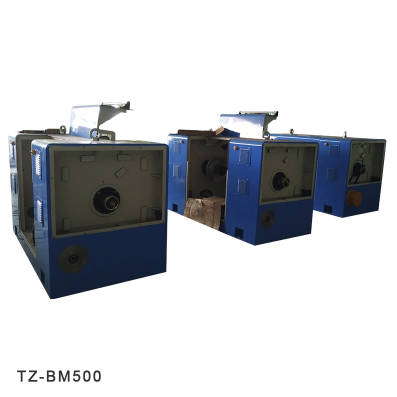
Understanding the Fundamentals: What is the Core Difference Between Bunching and Stranding?
Before comparing the machinery, it's essential to grasp the fundamental process difference between bunching and stranding. Though often used interchangeably, they describe distinct methods of creating a multi-wire conductor. The choice of process dictates the final characteristics of the cable and, consequently, the machine required. This distinction is the primary factor influencing every aspect of the comparison, from speed and cost to the final product's application.
Bunching is a process where individual strands of wire are twisted together in a non-uniform, helical pattern. The wires are gathered and twisted simultaneously without a specific geometric arrangement; their positions within the bundle are not fixed. This results in a highly flexible conductor with a rounder profile, often referred to as a "bunched" or "unilay" conductor. The primary goal of bunching is to combine fine wires into a single, flexible conductor with a larger cross-sectional area, enhancing its current-carrying capacity and flexibility.
Stranding, on the other hand, is a more precise and controlled process. Wires are laid together in a specific, predetermined geometric pattern, typically in concentric layers around a central core wire or element. Each layer of wires has a defined lay length (the axial distance for one complete twist) and direction. This method, known as concentric stranding, produces a conductor that is more compact, stable, and has superior mechanical strength and a smoother surface finish compared to a bunched conductor. This structural integrity is critical for applications where the cable must withstand physical stress or requires consistent electrical properties.
A Deep Dive into the Double Twist Bunching Machine
The Double Twist Bunching Machine, often simply called a "buncher," is the workhorse for high-speed production of flexible conductors. Its design is ingeniously simple and efficient, making it a cornerstone in manufacturing plants producing wires for the automotive, electronics, and construction industries. The name "double twist" comes from its core operational principle: it imparts two twists to the wire bundle for every single 360-degree rotation of its bow, leading to exceptionally high production output.
How Does a Double Twist Buncher Work?
The operation of a double twist buncher revolves around a rotating bow or flyer. Individual wires are fed from a creel, passed through a gathering die, and then guided through the machine's main shaft. The wire bundle is then threaded over a rotating bow, which spins at high speeds around a stationary take-up reel located inside the machine's cradle. The first twist is applied as the wire goes from the main shaft to the bow, and the second twist is applied as the wire travels from the bow to the take-up reel. This dual-twist action allows the machine to achieve rotational speeds that would be mechanically impossible for the take-up reel itself, enabling incredible production rates.
Key Advantages and Limitations
The primary advantage of the double twist buncher is its unmatched speed and efficiency. For producing conductors like Class 5 and Class 6 flexible cables, automotive primary wires, or LAN cable pairs, its output is unparalleled. This high speed translates directly to lower per-meter production costs. Furthermore, these machines are versatile, capable of handling a wide range of fine wire sizes. However, their main limitation lies in the process itself. The tension control can be less precise than in a strander, and the resulting bunched conductor lacks the geometric precision and compaction of a true stranded cable, making it unsuitable for applications requiring high mechanical strength or a perfectly uniform diameter.
Exploring the Tubular Stranding Machine: The Pillar of Precision
Where the double twist buncher champions speed, the Tubular Stranding Machine, or "tubular strander," champions precision, quality, and strength. It is designed specifically for creating concentrically stranded conductors where the geometric placement of each wire is critical. This machine is essential for manufacturing power cables, overhead conductors (like ACSR), control cables, and steel wire ropes, where the final product's structural integrity and electrical performance are non-negotiable.
What is the Mechanism of a Tubular Strander?
A tubular strander consists of a long, rotating tube that houses a series of cradles, each holding a bobbin of wire. As the main tube rotates, the wires are pulled from their bobbins and guided towards a closing die at the end of the machine. The rotation of the tube lays the wires helically over a central core, which is fed through the center of the machine. Unlike a double twist machine, a tubular strander imparts only one twist per rotation. The rigid, enclosed tube provides excellent support for the bobbins, allowing for very high rotational speeds (relative to other stranding methods like planetary stranders) and precise tension control on each individual wire. This results in a highly compact, stable, and geometrically perfect stranded conductor.
Key Advantages and Limitations
The hallmark advantage of a tubular strander is the superior quality and structural integrity of the final conductor. The process creates a compact, smooth, and stable cable with excellent dimensional consistency, which is crucial for subsequent processes like insulation extrusion. It is also capable of handling larger and stiffer wires, including steel and composite materials. The main limitations are its production speed, which is significantly lower than a double twist buncher, and its higher initial investment cost. The machine's footprint is also considerably larger, and changing bobbins can be more time-consuming.
Head-to-Head Comparison: Double Twist Buncher vs. Tubular Strander
To make an informed decision, it is crucial to directly compare these two machines across several key performance and operational metrics. The following table provides a clear, at-a-glance summary of how they stack up, which we will then explore in greater detail.
| Feature | Double Twist Bunching Machine | Tubular Stranding Machine |
|---|---|---|
| Core Process | Bunching (non-geometric twist) | Stranding (precise geometric layering) |
| Primary Output | Flexible conductors (e.g., Class 5/6, data pairs) | Compact, structural conductors (e.g., power cables, ACSR) |
| Production Speed | Extremely High (due to "double twist" principle) | Moderate to High (limited by rotational mass) |
| Conductor Quality | Good flexibility, round profile | Excellent compaction, geometric precision, high strength |
| Wire Size Range | Typically small to medium gauges (e.g., 0.05mm² to 16mm²) | Medium to large gauges, including steel and composites |
| Tension Control | Good, but generally less precise for individual strands | Superior, highly precise individual wire tensioning |
| Operational Cost | Lower per-meter cost due to high speed | Higher per-meter cost due to lower speed and higher energy use |
| Initial Investment (CAPEX) | Lower | Higher |
| Footprint & Noise | More compact, but can be noisy at high speeds | Larger footprint, enclosed design can mitigate noise |
The 2026 Landscape: How Are Industry Trends Shaping the Debate?
Looking ahead to 2026, the choice between these machines is becoming more nuanced, driven by powerful global trends in manufacturing, technology, and energy. The question is no longer just about speed versus quality; it's about how each machine can adapt to the demands of a smarter, more demanding, and more sustainable industrial environment.
Industry 4.0 and Automation: The Rise of Smart Manufacturing
By 2026, the integration of Industry 4.0 will be a standard expectation, not a luxury. For Double Twist Bunchers, this means the widespread adoption of real-time monitoring sensors for tension, lay length, and vibration analysis. Predictive maintenance algorithms will alert operators to potential failures in high-wear components like the bow (often made of carbon fiber for higher speeds) or bearings, maximizing uptime. For Tubular Stranders, automation will focus on reducing changeover times with automated bobbin loading systems and integrated quality control, using optical micrometers and spark testers to ensure the conductor meets specifications in real-time. Smart controls will optimize energy consumption based on production parameters, making these traditionally power-hungry machines more efficient.
Material Evolution and Market Demands (EVs, 5G, Renewables)
The explosive growth in Electric Vehicles (EVs), 5G infrastructure, and renewable energy is creating demand for new and specialized cables. This directly influences machine choice. The demand for highly flexible, high-voltage battery cables and lightweight data cables in EVs and robotics plays to the strengths of advanced double twist bunchers. These machines are being refined to handle finer alloy conductors and provide the extreme flexibility needed in dynamic applications. Conversely, the renewable energy sector requires robust, large-gauge aluminum (AAC, AAAC) and copper power cables for wind and solar farms. This is the domain of the tubular strander, which provides the necessary compaction and structural integrity for long-distance power transmission. Similarly, the construction of steel wire armouring for subsea cables and specialized control cables for industrial automation will continue to rely on the precision of tubular and planetary stranders.
Energy Efficiency and Sustainability as a Deciding Factor
Sustainability is a key business driver. In 2026, the Total Cost of Ownership (TCO) calculation will heavily weigh energy consumption. Manufacturers of Double Twist Bunchers are innovating with direct-drive motors, regenerative braking systems, and lightweight composite materials to reduce the energy needed to achieve high rotational speeds. For Tubular Stranders, the focus is on optimizing motor efficiency and reducing mechanical friction within the rotating tube. The ability of a machine to produce high-quality cable with minimal energy waste and material scrap will be a significant competitive advantage, pushing both machine types towards more sustainable designs.
Which Machine is Right for Your Production Line in 2026? A Practical Guide
The final decision rests on a clear-eyed assessment of your product portfolio, production targets, and market focus. The "best" machine is the one that aligns perfectly with your strategic business goals.
Choose a Double Twist Buncher For: High-Volume, Flexible Conductors
Your production line should feature a double twist buncher if your primary business involves:
Automotive Wiring: Manufacturing flexible primary wires (e.g., FLRY, AVSS) and sensor cables in massive volumes.
Data and Communication Cables: Producing twisted pairs for LAN cables (Cat5e, Cat6, Cat7) or wires for consumer electronics.
Flexible Building Wires: Creating flexible cords and building wires (e.g., H05V-K, H07V-K) where ease of installation is key.
Cost-Sensitive Markets: When competing on price, the high throughput and lower per-meter cost of a buncher are indispensable.
Choose a Tubular Strander For: High-Performance, Structural Cables
Investing in a tubular strander is the correct strategic move if your product focus is on:
Power Transmission & Distribution: Manufacturing low and medium-voltage power cables where conductor compaction and a smooth surface are critical for uniform insulation.
Overhead Conductors: Producing ACSR (Aluminum Conductor Steel Reinforced), AAC, and AAAC cables for utility grids.
Industrial and Control Cables: Creating multi-core control cables that require high geometric precision and durability.
Specialty and Armoured Cables: Applications involving steel wire screening or armouring where strength and precise layering are paramount.
Conclusion: A Symbiotic Future Driven by Application
The debate of Double Twist Bunching Machine versus Tubular Stranding Machine is not a zero-sum game. As we advance into 2026, it's clearer than ever that these machines serve distinct, yet equally critical, roles in the wire and cable industry. The double twist buncher will continue its reign as the king of speed and volume, meeting the insatiable demand for flexible conductors in the automotive and electronics sectors. Its evolution will be marked by greater intelligence and efficiency.
Simultaneously, the tubular strander will solidify its position as the master of precision and strength, providing the foundational infrastructure for our power grids, renewable energy projects, and heavy industrial applications. Its future lies in enhanced control, material versatility, and automation. The ultimate decision for any manufacturer is not about which machine is definitively "better," but which technology is the precise tool needed to meet the specific demands of their target market, ensuring a final product that delivers on quality, performance, and cost-effectiveness.